The Story Behind My Southern Wetland Photography
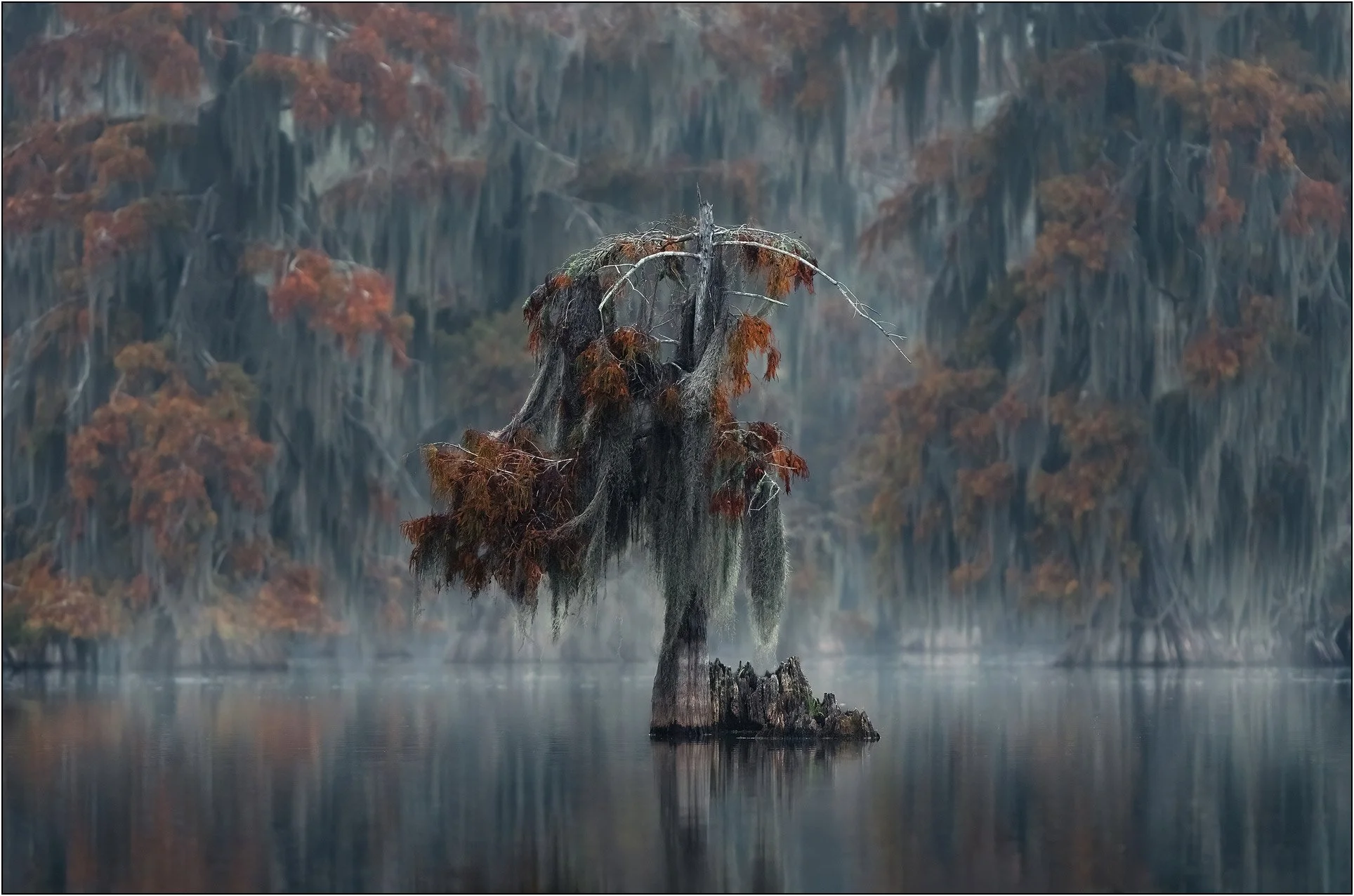
Isolated tree in misty southern wetland.
My exploration of the southern wetlands actually began in 2018. That was the year my daughter decided to attend college in the South. Realizing I would likely have reasons to visit the region frequently over the coming years, I started researching what photographic opportunities might exist nearby.
After some digging, I found that unlike California—with its diverse landscapes and abundant subjects—the South is defined largely by its wetlands. At that time, wetland photography wasn’t nearly as popular as it is today. There were only a handful of photographers showcasing such work online. But the moment I saw those images, I was captivated. I have always had little resistance to scenes that feel mysterious and dreamlike.
For me, wetlands were completely new territory. Driving alone across land had never been a concern—I would go anywhere without hesitation. But paddling alone through swamps filled with alligators was something I had never experienced. And, of course, my impressions of swamps from films and literature had always been somewhat intimidating.
我对南部湿地的探索,始于2018年,那个时候女儿决定去南部上大学,想象到未来几年我可能会有借口经常去那里,于是我就开始研究那附近有什么可以值得拍摄的地方。
研究一圈下来,那里不像加州有着多样的地貌和风光拍摄题材,最大的特色就是湿地。那个时候湿地风光拍摄还不像现在这么普遍,网上只能看到很少几位摄影师拍摄的湿地风光,但是我还是一看到就被吸引了,我对那种神秘梦幻的场景没有丝毫抵抗力。
湿地拍摄对我来说是一个全新的领域,在陆地上开车我没有任何疑虑,哪里都敢一个人去,但是在神秘莫测鳄鱼环绕的沼泽地里一个人划船还从来没有体验过,何况以前看过的影视和文学作品里对沼泽地的描述还都是有点吓人的。
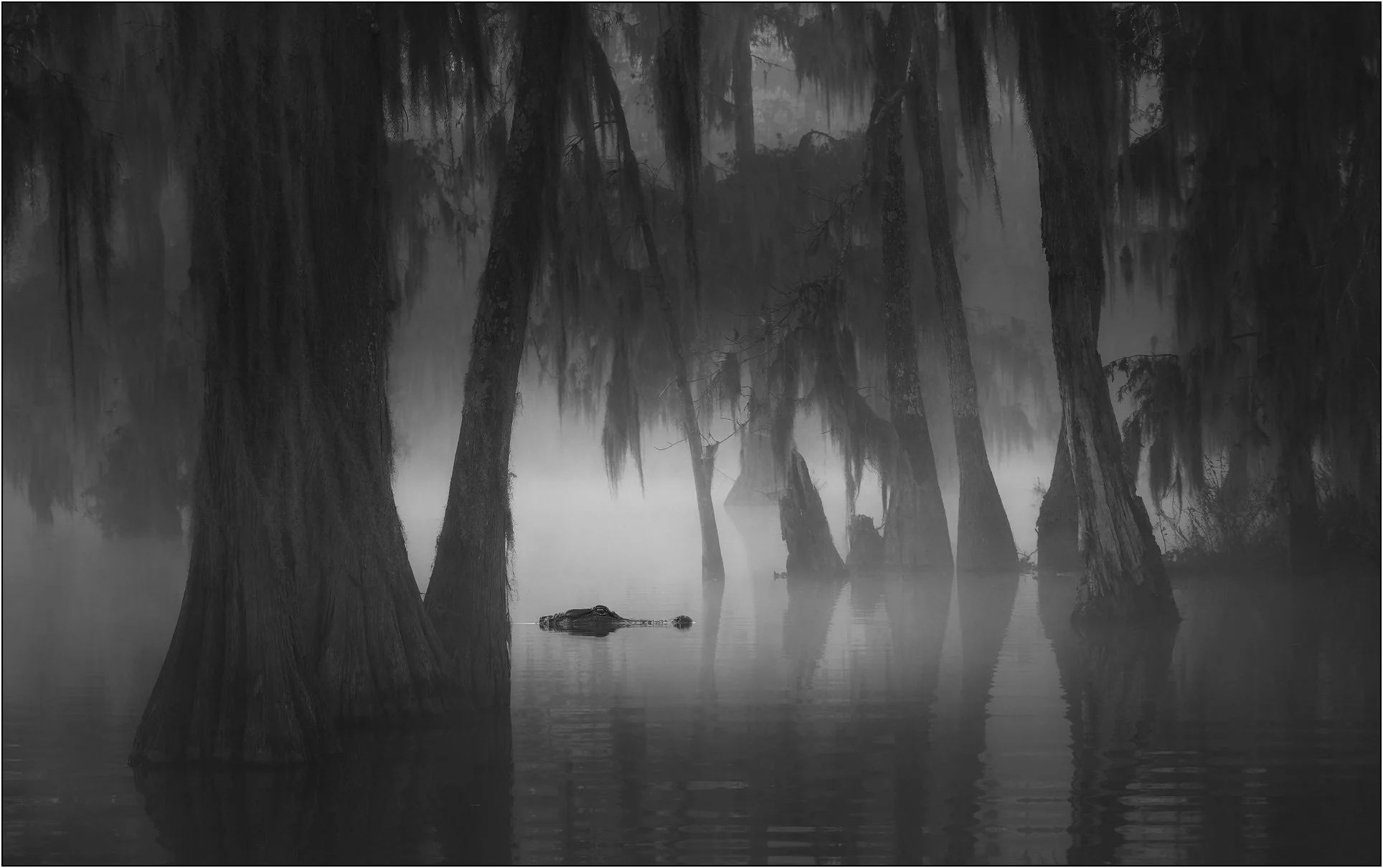
An alligator in misty swamps.
Still, people live in these environments. And the images I had seen were simply too compelling to ignore. I decided to explore it for myself—after all, seeing is believing.
In the summer of 2018, when I drove my daughter to college, I arranged a day with a local boat guide I found online. I wanted to experience the wetlands firsthand. During the trip, I talked with him constantly, asking questions and learning about the environment. Gradually, my doubts and subtle fears dissolved, replaced by a growing sense of excitement—the excitement and confidence to one day explore on my own.
Learning to Go Alone
After returning home, I began researching seriously. The first challenge was the boat.
Hiring a guide was convenient, but limiting—expensive, time-constrained, and doesn’t really work for quiet, personal exploration. Motorboats also have deeper drafts, making it impossible to access shallow areas. The ideal solution, I realized, was a kayak.
Some parks offer kayak rentals, but again, timing was an issue. For landscape photographers, the golden hours happen before rental shops even open. The real solution was to have my own kayak and bring it with me.
Renting a kayak was easy. The real challenge was: how do you load and unload it alone?
A stable kayak is not light. I had considered foldable options, but never fully trusted them—fine for leisure paddling, perhaps, but not something I wanted to rely on in waters filled with alligators. Lifting a kayak onto the roof of my car by myself seemed nearly impossible. I even considered renting trucks or trailers—until one day, I stumbled upon a method online that made it possible to load a kayak onto a regular SUV roof by myself. I was thrilled.
可是,依旧有那么多人是在沼泽地的环境里生活的,我看到的图片又是那么吸引我,于是我决定开始对那个环境进行一下探索,毕竟眼见为实。2018年夏天送女儿去上大学的时候,我就在网上找到了一个船老大,约定了一天的时间跟着他游览一下南部湿地,实际体验一下。在船上我一直跟他聊天了解各种情况,我心里的疑惑和一丝恐惧逐渐化解开了,取而代之的是一种兴奋,想要独自探索的兴奋和信心。
回家后我就开始做各种研究,首先要解决船的问题。最方便的当然还是雇佣船老大,缺点是时间受限,价格高,不能自己随心所欲安安静静进行探索,而且那种机动船吃水深,一些浅的地方根本进不去,最理想的就是划kayak。一些公园里有kayak出租,问题也是时间受限,对于风光摄影师来说黄金时段公园出租处都没有开门,自己有一条船随车带着才是最终解决办法。
租船没有问题,关键是自己一个人如何装船卸船?稳当的船都是有相当重量的,(当时我也看到一种折叠的船,但是我总觉得那种不结实,普通湖上泛舟游玩还可以,但是在满是鳄鱼的湖里万一漏了可不是什么好玩儿的事情。)我不可能凭一己之力把船举到车顶上,所以我曾经考虑过租卡车,租U-Haul拖车等等各种办法,直到有一天我偶然在网上看到一个办法,把船放到普通SUV车顶成为了可能,把我高兴坏了!
下面这个视频就是我当时一个人把船放到车顶固定的整个过程,因为是自己一个人,视频是把手机放在旁边的柱子上面拍的,角度受限,但是过程还是看得清楚的,如果有朋友也想以这种方式自己去探索,可以作为一个参考。整个步骤的关键是要事先准备一个小毯子,否则会把车顶划坏。我的力气属于中等吧,把船抬起来斜靠在车上还是比较费劲的,但是毕竟不是不可能完成的任务。
How to load a kayak onto the top of a car.
(I put my phone on a post to capture this timelapse video)
The key step is to prepare a small rug beforehand to protect the car roof. I would say my strength is average—lifting the kayak and leaning it against the car is not easy, but definitely achievable.
With that skill, I was no longer limited to parks. The southern wetlands are vast—any place with a launch point becomes accessible.
Some launch sites are free; others charge a small fee. Most people there are fishermen. I’ve rarely seen anyone like me—just there for photography. Most photographers tend to gather in a few well-known state parks. Those locations are indeed beautiful and efficient for producing strong images within limited time.
But for me, exploration itself is the greater reward. Only through immersion can I truly experience the essence of the wetlands—and allow it to merge into my work.
On Safety
With the logistics solved, safety became the next priority. Independent exploration is not reckless—it is courage built on preparation.
Alligators were the first concern. Through research, I learned the difference between alligators and crocodiles. The southern wetlands are home primarily to alligators, which are relatively less aggressive. Crocodiles are found mainly in southern Florida.
Encounters with alligators are common. But as long as you follow basic wildlife principles—keep your distance and do not disturb them—you are safe. This understanding gave me the confidence to spend hours paddling alone among them. On one trip, I saw dozens.
有了这个技能,就不必受公园的限制,南部大片的湿地,只要能找到可以下船的地方都可以下去进行探索。有些地方没人看守是免费的,也有些地方要收几块钱的费用,去这些地方的主要是钓鱼的人,像我这样拍照的我还没有遇到过,摄影师们可能主要都集中在附近的几个州立公园了。州立公园圈起来的确实都是风景比较优美的地方,适合时间有限又想出片的摄影师们。但是对我来说,探索的乐趣和收获更大,这种沉浸,才能更多体验到南部湿地的精华,并且融合到自己的作品里。
船的问题解决了,还要考虑的是安全问题,任何可能遇到的危险,如何避免,如果遇到如何自救,这些都是必须要考虑的问题。独自探索不是盲目冒险,而是做好充分准备后的勇敢前行。
首先是鳄鱼,经过研究,我才知道鳄鱼在英文里分alligator和crocodile,南部湿地里基本都是alligator,是比较温和 的,凶猛的crocodile只在佛罗里达州南部才有。有很大概率遇到的alligator,只要遵循一贯的野生动物原则,不去打扰,保持距离,就没有问题。这也给了我底气,敢于一个人在下面满是鳄鱼的湖面上划船大半天,专门去拍鳄鱼,那天至少看到了几十条。
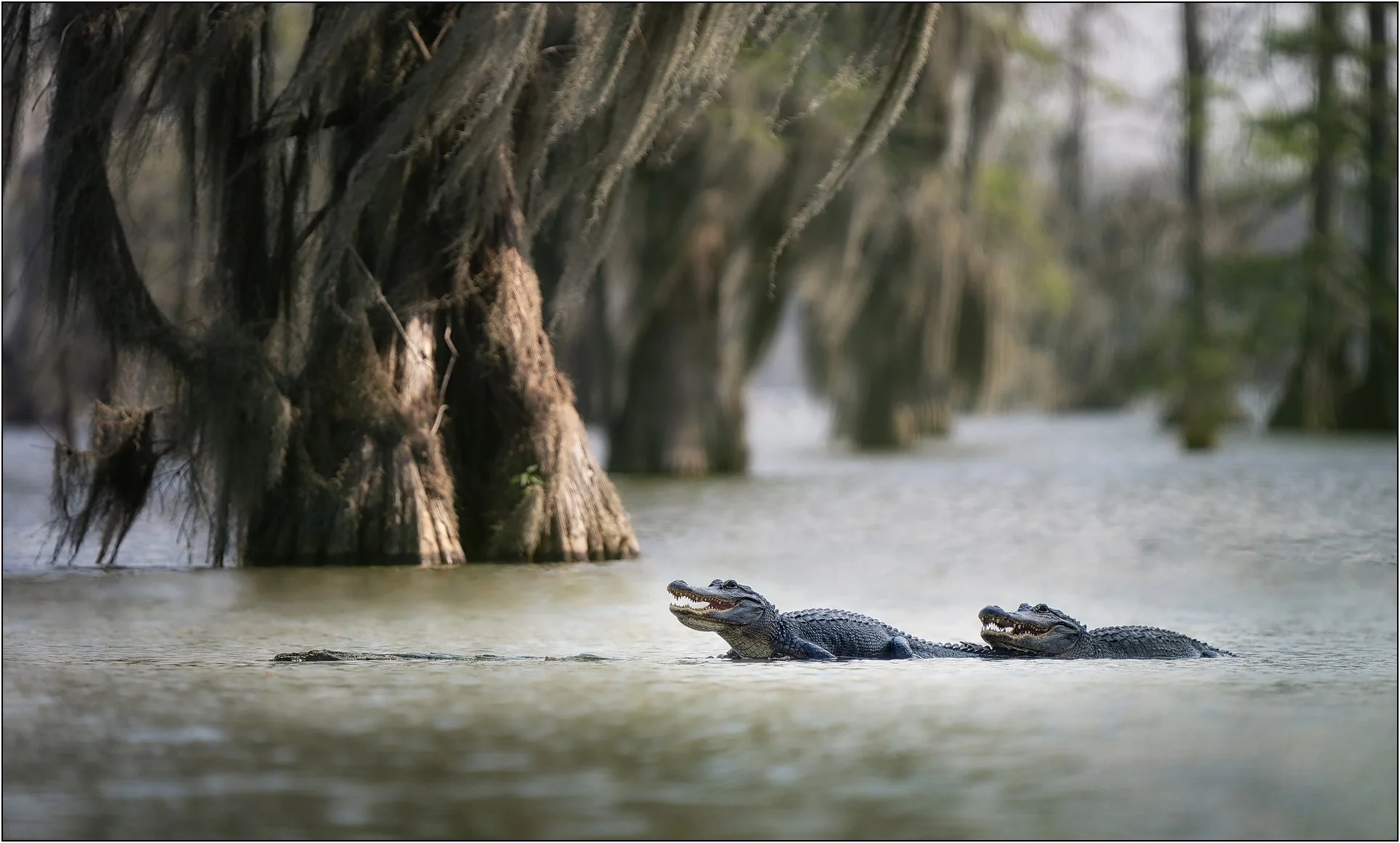
Two alligators lying on a tree log in springtime.
Capsizing is another risk, especially on larger lakes with wind or boat wakes. If the wind is too strong, I simply don’t go out. If a motorboat passes, I turn the kayak to face the waves head-on. That way, the kayak moves up and down instead of tipping sideways.
Of course, I also studied how to flip a kayak back upright and climb back in—though fortunately, I’ve never had to put that into practice.
Unexpected Moments
No matter how prepared you are, surprises happen.
On my very first trip transporting a kayak on my car roof, I suddenly heard a loud noise on the highway. Looking in the rearview mirror, I saw the kayak shift—it seemed something had fallen off.
I pulled over immediately. The foam pads beneath the kayak had broken apart. They were part of a rental kit, likely worn out over time and hardened to the point of crumbling.
Luckily, I hadn’t gone far. I called my daughter to pick me up (because I cannot drive my car with the kayak loose on top), went to a nearby sports store, bought a new roof rack kit, and continued the journey. It could have been much worse, I felt lucky.
There were also times when the kayak got stuck in muddy shallows. I hesitated to step into the water—childhood memories of people sinking into swamps weren’t easy to ignore. The first time, it took considerable effort to free the kayak. Over time, I learned how to avoid or exit those situations more easily.
From Solitude to Shared Experience
Despite all this preparation, my first true exploration didn’t happen until 2021 due to the pandemic.
Just as restrictions eased, I found that several groups of my photographer friends arrived in the wetlands at almost the same time. What I had imagined as a solitary journey turned into a shared experience among friends. The video in my US south portfolio was taken by some of my friends during that time.
其次是翻船的可能,尤其在比较大的湖面上,风大的时候,或者有机动船经过的时候,掀起的浪如果控制不好,很有可能会翻船。风太大就不要下水,如果看到有机动船经过,立即调转船头,让船的方向与浪的方向垂直,这样船只是前后颠簸,不会侧翻。万一翻船,我看了好多在水里如何把船翻过来然后爬上船的视频,只是幸好还没有实践过。
事先考虑得再周全,总还是有意想不到的事情发生。就在我第一次租了船放在车顶开往湿地的路上,突然觉得车顶一声响,从后视镜一看,车顶好像掉了什么东西下来,船也歪到了一边,赶紧把车停在路边查看,结果发现船下面的海绵垫掉了。这几块海绵垫是租船的地方配套出租的车顶kit,几块硬海绵,可能是因为用的时间久了,海绵都已经硬化了,在车顶一颠就碎了。还好我没有开出太远,赶紧打电话给女儿让她过来接我一下,去商场买新的海绵垫,因为我这个车现在无法把船固定好,不能开。一切顺利,去商场买了新的kayak车顶安装套件,装好船继续出发了,算是虚惊一场。
还有几次,船搁浅在沼泽泥地里,我也不敢轻易下水,因为脑子里一直有小时候就看到过的经常有人陷在沼泽地里越陷越深的画面。第一次搁浅,费了很大劲才把船挣脱出那个浅滩,后来就越来越有经验尽量避免或者比较容易地退出浅滩。
前面说了这么多准备工作,因为遇到疫情,结果实际上第一次正式探索是在2021年,碰巧那一年疫情刚过,有好几路摄影师都几乎在同一时间去南部湿地,于是计划的独自探索变成了朋友们的大狂欢,我的南部湿地作品集里面的视频就是那次朋友们给我拍摄的。那之后,我又独自多次在更广的范围里去了多个不同地方,积累了更多的作品和经验。
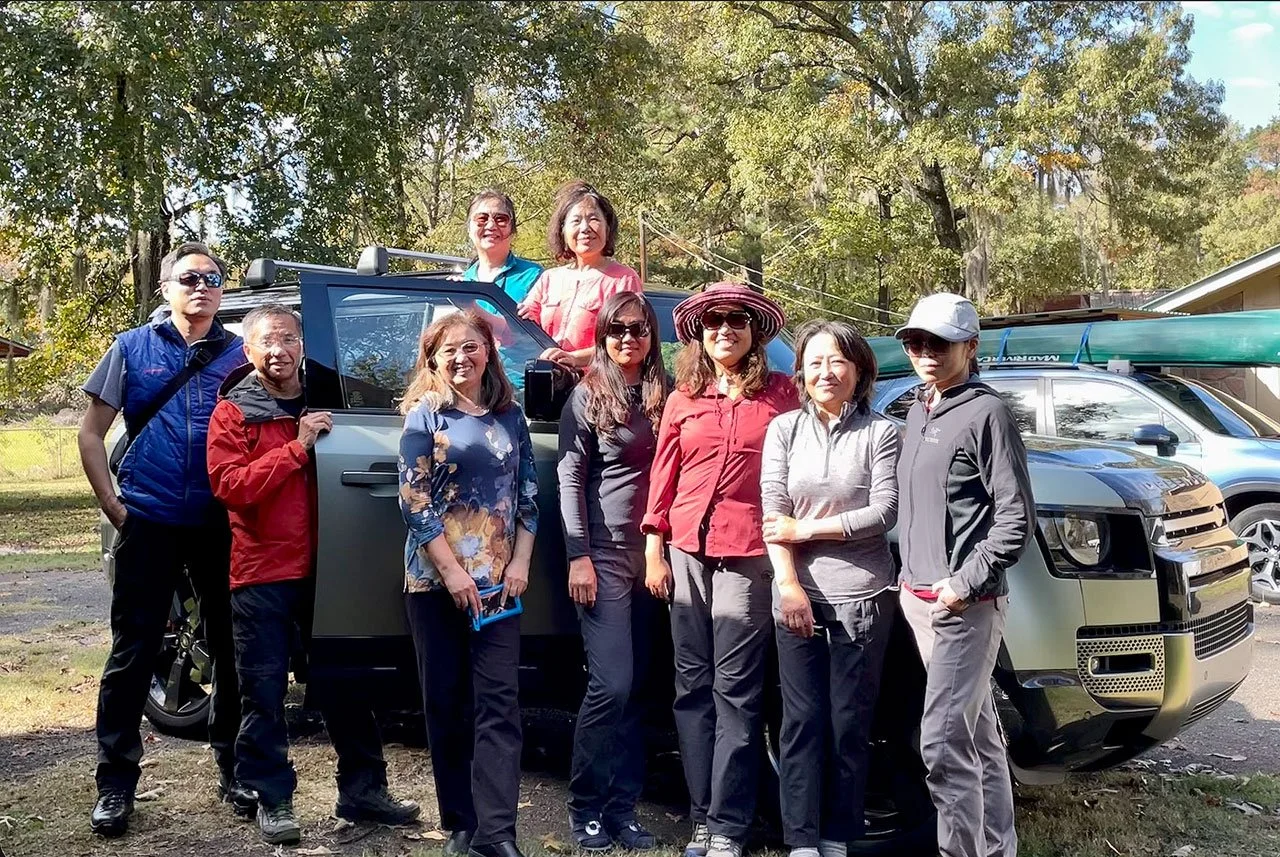
Friends gathering in the southern wetland.
Since then, I have returned several more times alone, exploring a wider range of locations, gradually building both my portfolio and my experience.
A Few Shooting Tips
1. Best Season
Autumn is the most iconic—around mid-November, when bald cypress trees turn a rich red, creating a unique waterscape. The cooler temperatures also increase the chance of morning fog, transforming the wetlands into something almost otherworldly. Spring (February–March) offers fresh greens, blooming wildflowers, and active wildlife—also a wonderful time to shoot.
上面说的都是拍摄背后的故事,下面简单说一下拍摄技巧:
1. 拍摄时间,以秋季为主,一般是11月中旬左右,落羽杉树叶变红,独特的水上秋色非常迷人,那时的气温也低,如果早上能够遇到雾气,那是绝对的仙境。春天二三月份的时候嫩绿的色彩也很迷人,野花盛开,动物们尤其活跃,也是拍摄的好时候,只是遇到有雾的天气可能会少一些。
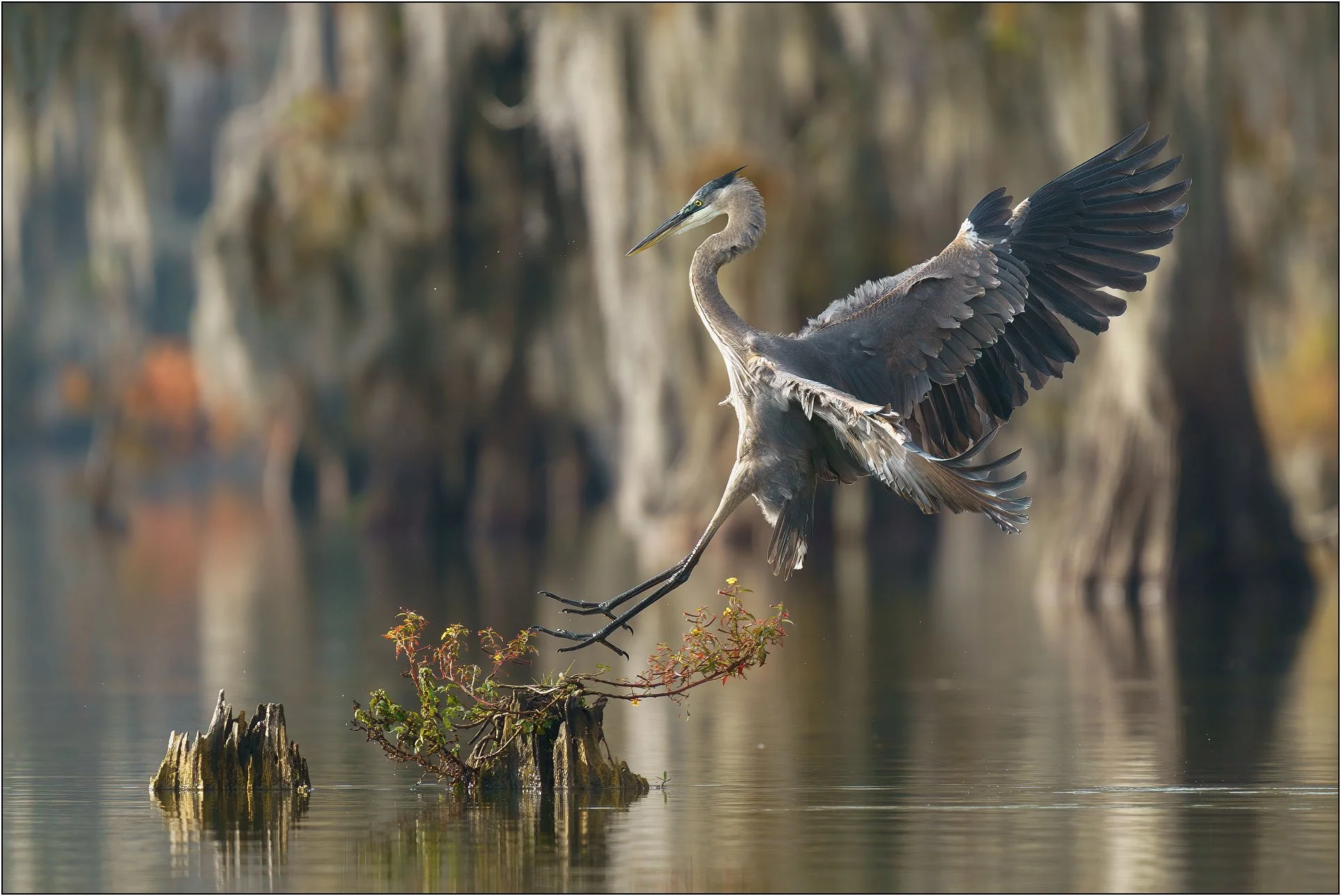
A blue heron landing on bald cypress tree stump.
2. Gear & Settings
Middle range to telephoto lenses are recommended; wide angles are rarely used. Since you’re shooting from a boat and wildlife often appears, faster shutter speeds are essential—typically at least 1/200–1/300 sec. For telephoto lenses, I use at least the reciprocal of twice the focal length—for example, 1/800 sec for a 400mm lens. For wildlife action, even faster speeds are needed. If you want to create ICM (Intentional Camera Movement) dreamy effects, use slower shutter speeds (around 1/4 to 2 seconds) and move the camera during exposure.
2. 拍摄器材与参数,建议使用中焦和长焦镜头,广角镜头使用的机会不多。因为基本都是在船上拍摄,又经常有动物入镜,所以快门速度都比较高,至少要两三百分之一秒,如果使用长焦镜头速度要更快,我一般设定在焦段的两倍的倒数,比如400mm镜头,速度至少要1/800秒,这是在拍风光的时候,拍动物动作瞬间要使用野生动物拍摄设置。上面这些设置是为了保证画面清晰,如果想要拍摄ICM模糊效果的图片,快门可以设置在1/4-2秒左右,根据自己想要的效果,在这个时间里抖动相机进行拍摄。
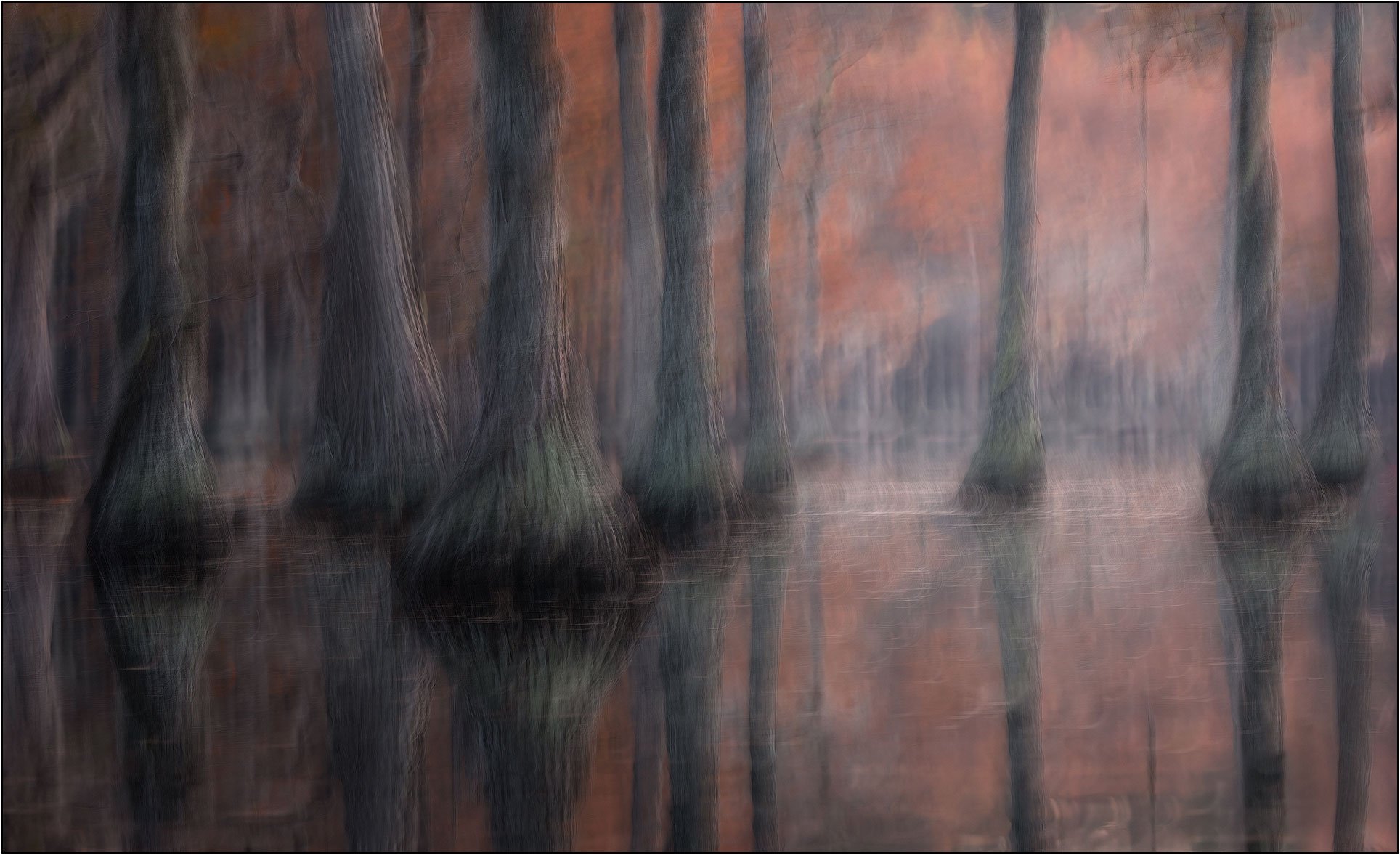
ICM dreamy effect of bald cypress trees in southern wetland.
3. Composition
Pay attention to layering. Fog, light, and the arrangement of trees all play crucial roles in creating depth and atmosphere.
3. 拍摄场景的构图要注意画面的层次,通常雾气、光线、树木排列方式等等都是画面具有层次感和氛围感的重要考虑因素。
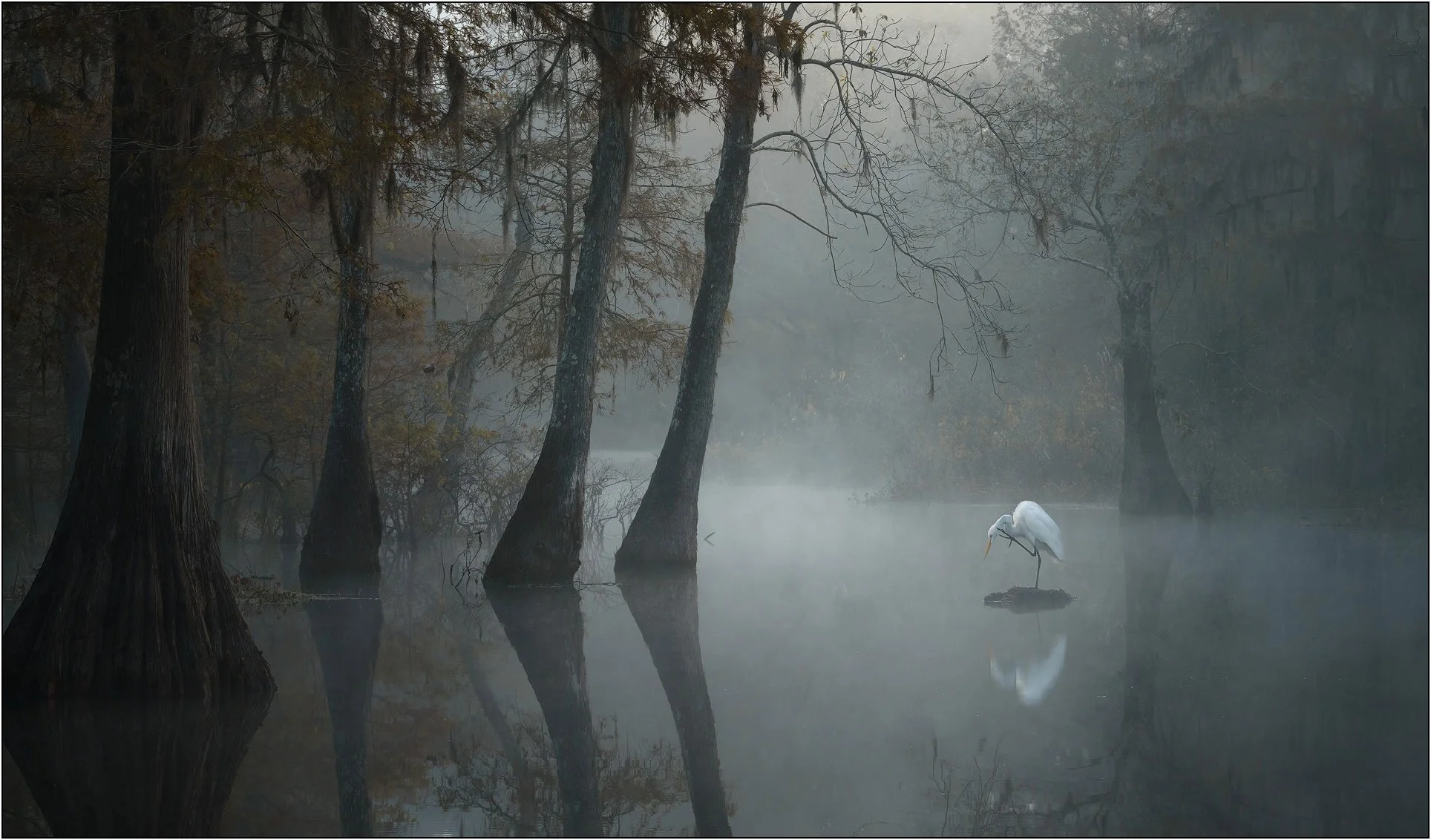
A great white egret preening the feathers in the misty wetland.
4. Enjoy the experience
There’s something special about paddling through bald cypress trees draped with Spanish moss. No matter the weather, and whether or not you capture the image you had in mind, don’t forget to simply be present—and take in the beauty around you.
For more images, please visit my Southern Wetland collection.
4. 享受湿地景观,泛舟在挂满西班牙苔藓的落羽杉树林里是非常享受的一件事,无论天气如何,能否拍到梦想的照片,都不要忘记享受当前的美景。
更多图片请看我的南部湿地作品集。