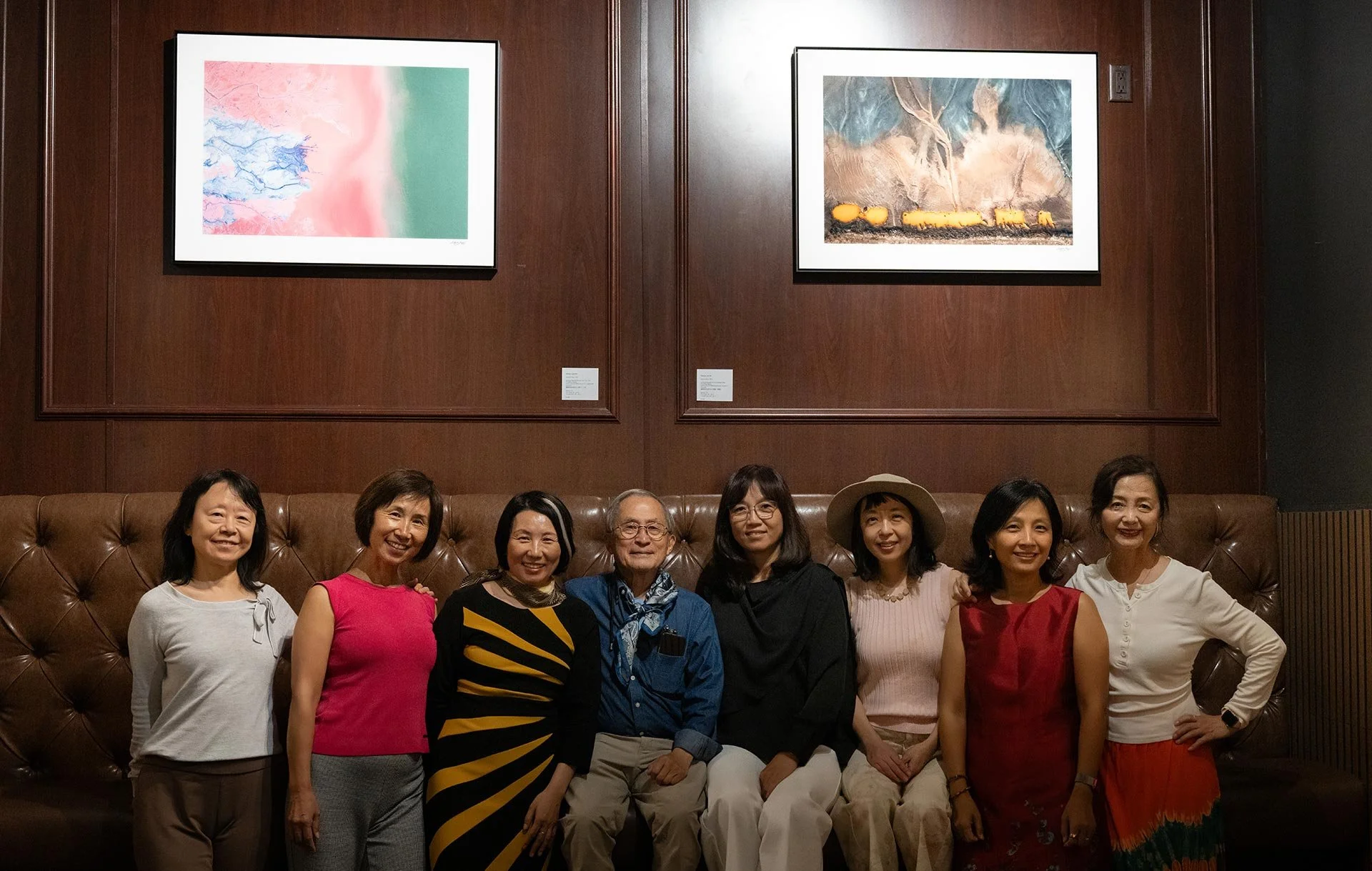
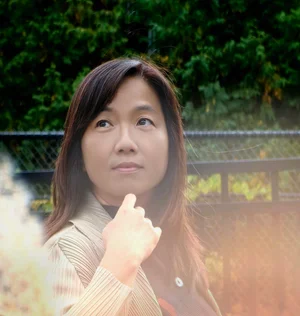
LIGHT OF BECOMING——Visual Art Exhibition by Lew Yung-chien, RCA & Ning Aidong, September 19 – October 11, 2026
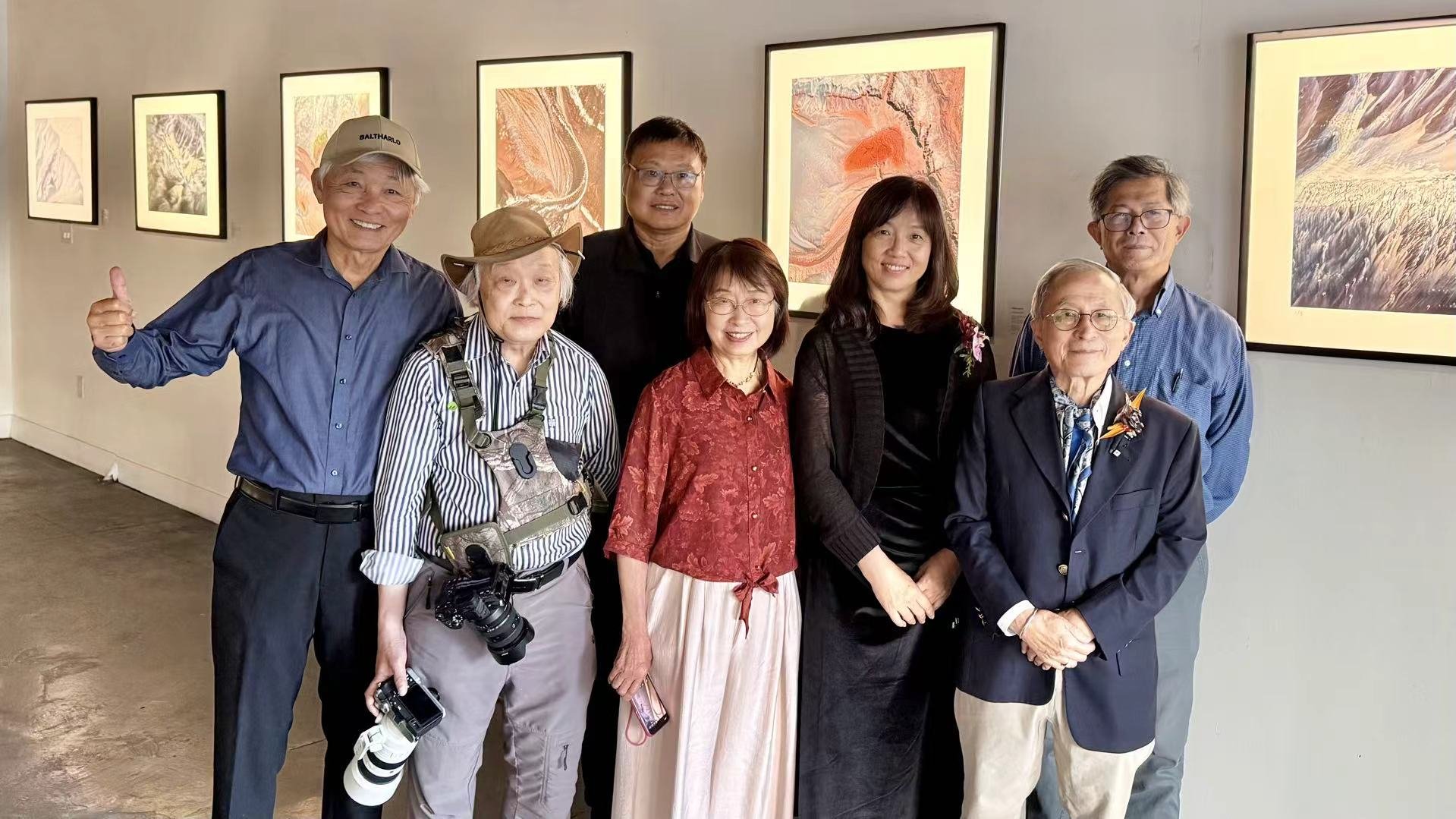
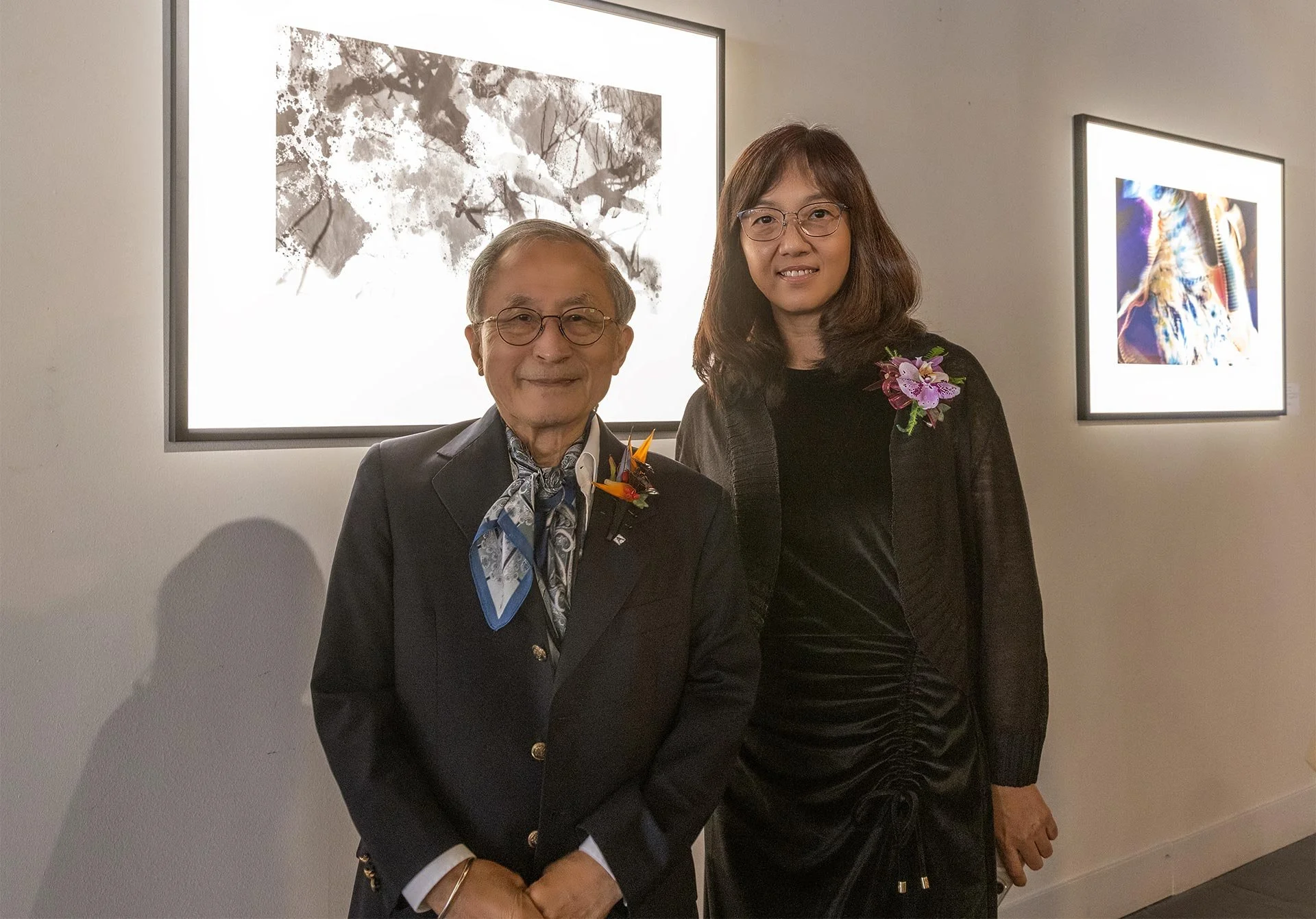
My two-person photography exhibition with Lew Yung-chien, RCA, Light of Becoming, opened at the Silicon Valley Asian Art Center on September 19, 2026, and will remain on view through October 11.
For exhibition details and the digital catalog, please visit the Silicon Valley Asian Art Center website:
https://www.artshu.com/art2.0/UI/data/exhibitions.html
The exhibition has also been featured by World Journal and Sing Tao Daily:
https://www.worldjournal.com/wj/story/121368/9777232?zh-cn
https://www.singtaousa.com/2026/09/26/news/usa/liuguanghuajing-liurongqian-ningaidong/
我与加拿大皇家艺术学院刘荣黔院士在硅谷亚洲艺术中心的摄影双个展——流光化境,于2026年9月19日开幕,展览将持续至10月11日。
展览详情与电子图录请见硅谷亚洲艺术中心官方网站:
https://www.artshu.com/art2.0/UI/data/exhibitions.html
世界新闻网与星岛日报也对此次展览进行了报道:
https://www.worldjournal.com/wj/story/121368/9777232?zh-cn
https://www.singtaousa.com/2026/09/26/news/usa/liuguanghuajing-liurongqian-ningaidong/
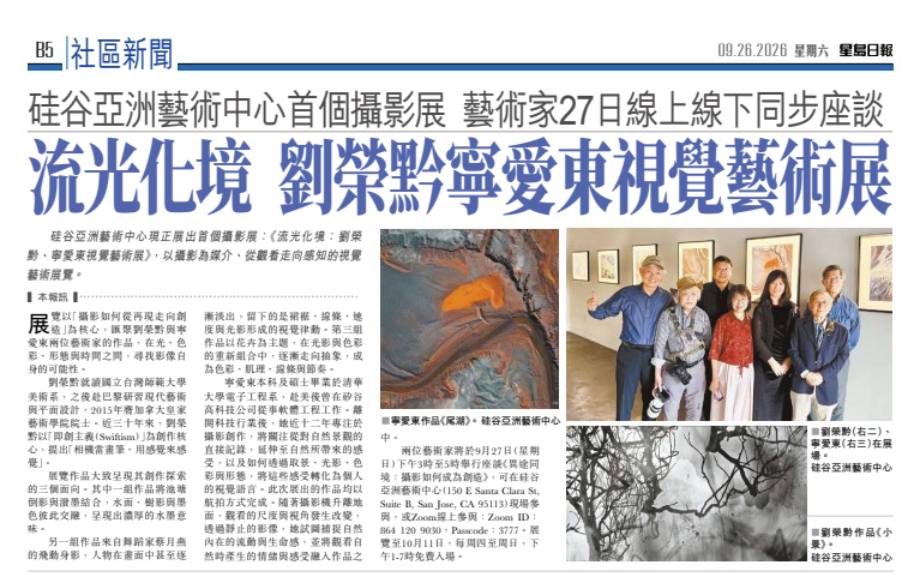
Below is the original press release written by Xinru Xu, Deputy Director of the Silicon Valley Asian Art Center.
Light of Becoming: Visual Art Exhibition by Lew Yung-chien and Aidong Ning Opens at the Silicon Valley Asian Art Center
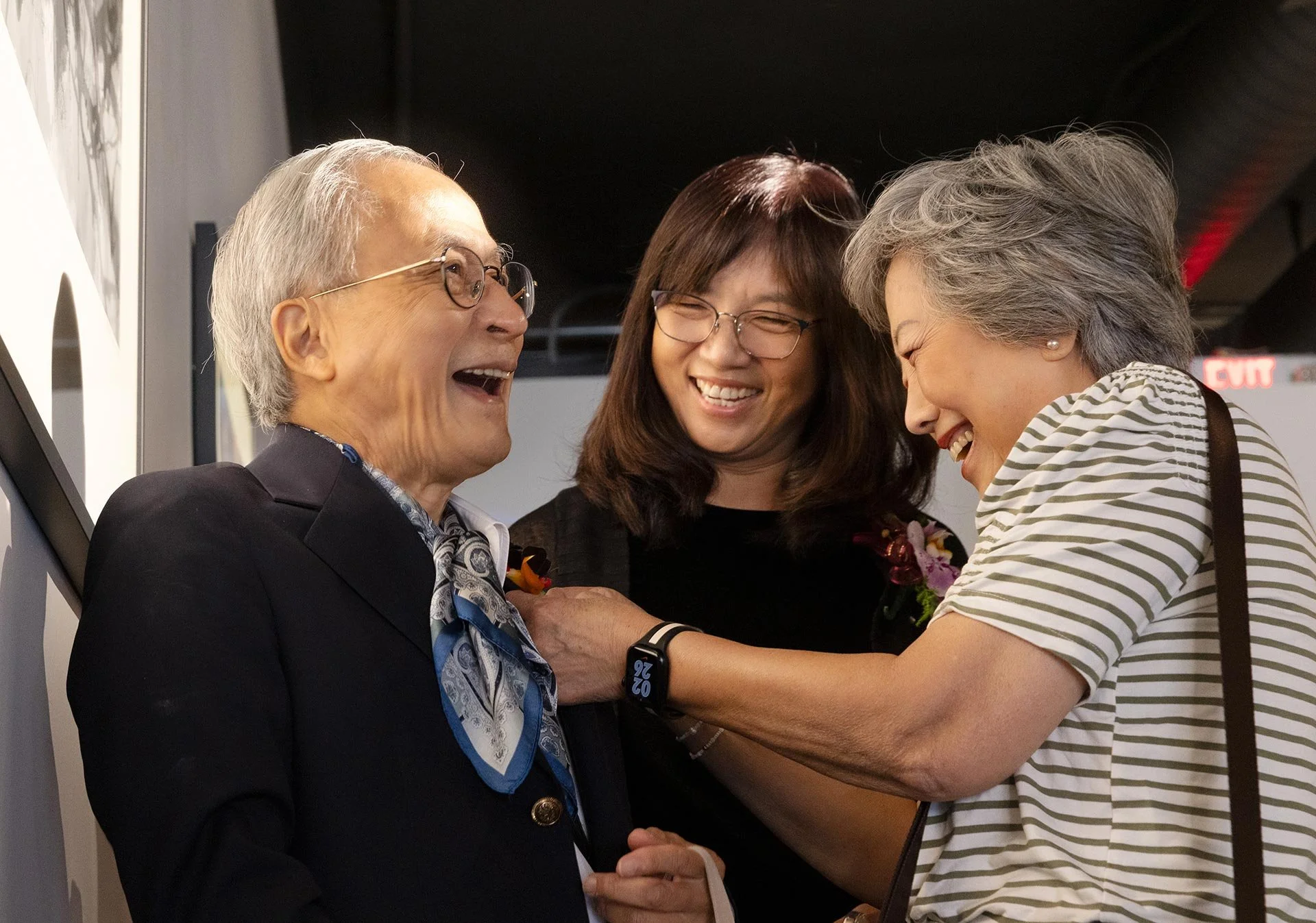
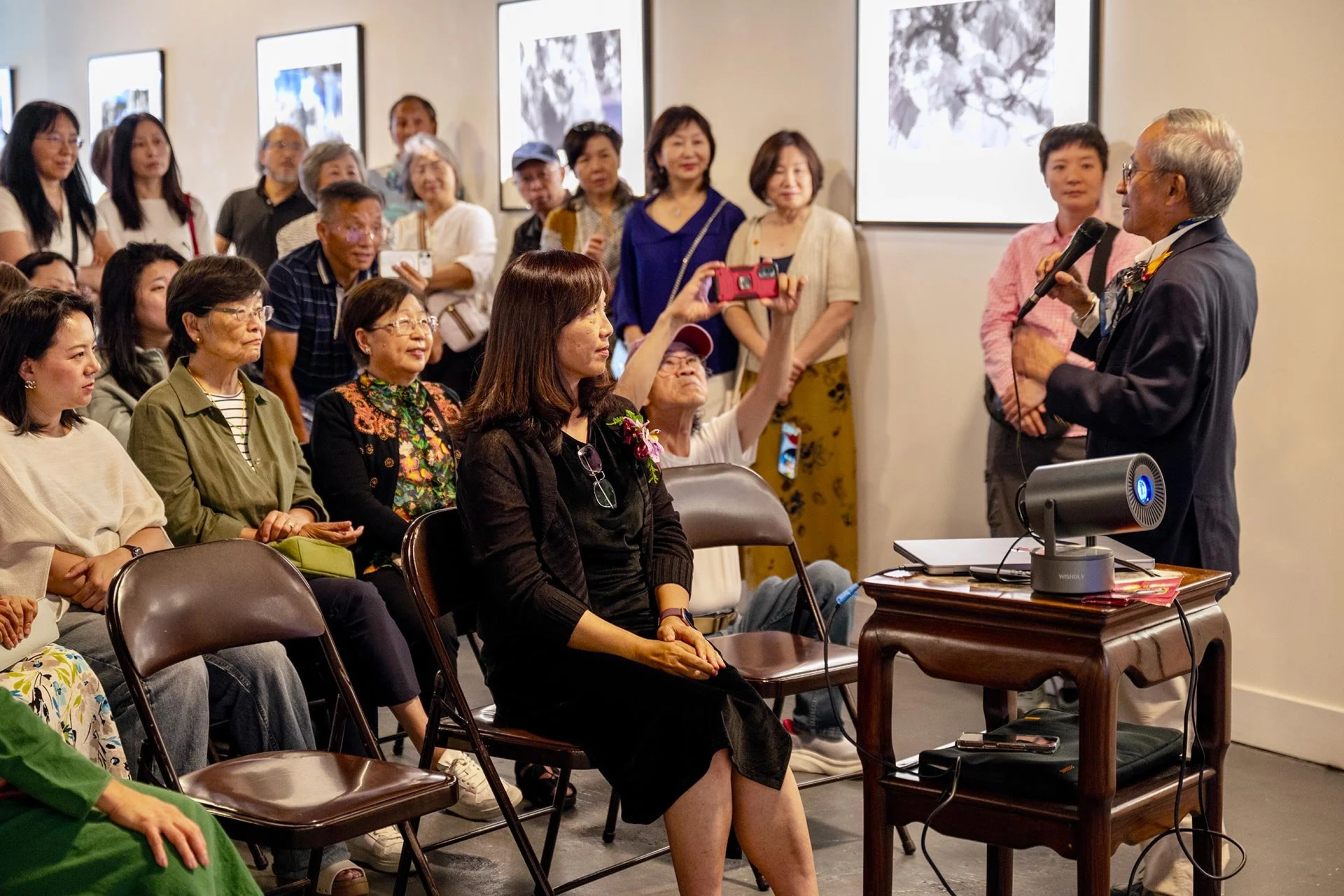
On the afternoon of September 19, Light of Becoming: Visual Art Exhibition by Lew Yung-chien and Aidong Ning opened at the Silicon Valley Asian Art Center. Artists, scholars, members of the cultural community, and guests from across the Bay Area gathered to celebrate an exhibition that uses photography as its medium while moving beyond seeing toward perception and experience.
At the opening, the Atlantic Photographers Association sent a congratulatory message: “Art shines through exchange, and light and shadow endure through sharing,” expressing appreciation for the Silicon Valley Asian Art Center’s longstanding support of artistic and cultural exchange. Professor Zhongming Lin, president of the Peony Poetry Society, spoke about his observations and impressions of the two artists’ work. The Silicon Valley Tea Appreciation Society also presented a special tea service. Its founding president, Jingxi Wu, shared a treasured sixteen-year-aged Fuding White Peony tea with the guests. Tea, imagery, and art came together in an atmosphere imbued with a distinctly Eastern cultural sensibility.
At the heart of Light of Becoming is a question: How can photography move from representation toward creation?
The exhibition brings together the work of Lew Yung-chien and Aidong Ning. Their life experiences and artistic backgrounds could hardly be more different, yet years of exploration have led them toward a shared direction: moving beyond the simple recording of what lies before the camera and seeking, through light, color, form, and time, the expressive possibilities of the photographic image itself.
Lew Yung-chien began his artistic journey with traditional Chinese ink landscape painting at the Department of Fine Arts of National Taiwan Normal University before continuing his studies in modern art and graphic design in Paris. Over decades of artistic practice, the spirit and poetic resonance of ink painting gradually merged with the structure, color, and visual rhythm of modern design.
For nearly thirty years, Lew has developed his work around a creative philosophy he calls Swiftism, based on the idea of using “the camera as a brush” and “feeling with feeling.” Rather than treating the camera merely as a tool for recording reality, he transforms it into a medium for directly capturing perception and creating images.
The works in this exhibition broadly reveal three dimensions of that exploration.
In one group, reflections on ponds are combined with effects reminiscent of splashed ink. Water, reflected trees, and ink-like forms merge into images strongly evocative of traditional Chinese painting. Natural scenery is deconstructed at the moment of exposure: the resulting images suggest landscapes while simultaneously moving beyond any specific landscape.
Another group originates in the movement of dancer Tsai Yueh-yen. Lew captures fleeting moments in which fabric and skirts sweep through space, selecting only five images from a vast number of photographs. The figure itself gradually recedes, leaving behind the visual rhythm of flowing fabric, line, speed, light, and shadow. Ms. Tsai also attended the opening and joined the artists and guests in conversation, adding another dimension to the artistic exchange.
The third group centers on flowers. Here, flowers are no longer simply subjects to be photographed. Through the recombination of light, shadow, and color, they move toward abstraction, becoming compositions of color, texture, line, and rhythm. Lew’s photography gradually shifts the question from “What is it?” toward “What does it make us feel?”
While Lew Yung-chien came to photography through ink painting and design, Aidong Ning’s artistic path began in science and technology.
Ning received both her bachelor’s and master’s degrees in Electronic Engineering from Tsinghua University. After moving to the United States, she worked as a software engineer in Silicon Valley’s high-tech industry. Rational thinking, technology, and precision formed an important foundation of her early life experience. After leaving the technology industry, she returned her time and attention to the natural world and has devoted herself to photography for nearly twelve years.
Landscape photography has remained an important foundation of Ning’s work. Through years of observation and exploration, her attention gradually shifted from directly recording natural scenery toward the feelings evoked by nature—and toward finding ways to translate those feelings into a personal visual language through framing, light, color, and form. Abstraction has consequently become an increasingly important direction in her recent work.
All of Ning’s works in this exhibition were created through aerial photography. As the camera rises above the ground, scale and perspective change. The tides of the Qiantang River and tailings lakes near mining sites take on entirely different appearances when seen from above. Water, minerals, earth, and terrain are reorganized into color, line, and texture, creating images that approach abstraction.
What interests Ning is not simply the patterns formed by nature, but the movement, energy, and rhythm within them: the advance and retreat of tides, the erosion of flowing water, the accumulation of minerals, and the traces left by time across the surface of the earth.
For Ning, photography is not merely a way of showing “what this is.” It is a way of transforming an experience of nature into a visual experience. Through still images, she seeks to capture the movement and sense of life within nature, while bringing into the work the emotions and sensations that arise through observation.
In her practice, representation and abstraction are not two entirely separate forms. Rather, they represent different layers of seeing and sensing nature: from recognizing a landscape, to experiencing it, and ultimately to understanding nature anew through the photographic image.
If Lew Yung-chien’s journey moves from ink painting and design toward the freedom of spontaneous perception embodied in Swiftism, Aidong Ning’s journey moves from electronic engineering and technology toward nature, and from nature toward abstraction.
Two very different life paths ultimately meet through photography.
Light of Becoming is therefore more than an exhibition of works by two photographers. It presents two different ways of seeing and two distinct artistic journeys converging through the photographic medium. One artist begins with ink painting, using the camera as a brush to capture sensation in an instant. The other begins with science and technology, using aerial photography to see the earth anew and to discover abstraction within nature’s forms and colors.
Their backgrounds and methods differ, yet both gradually move away from the direct representation of reality and toward a freer space between what is seen and what is felt.
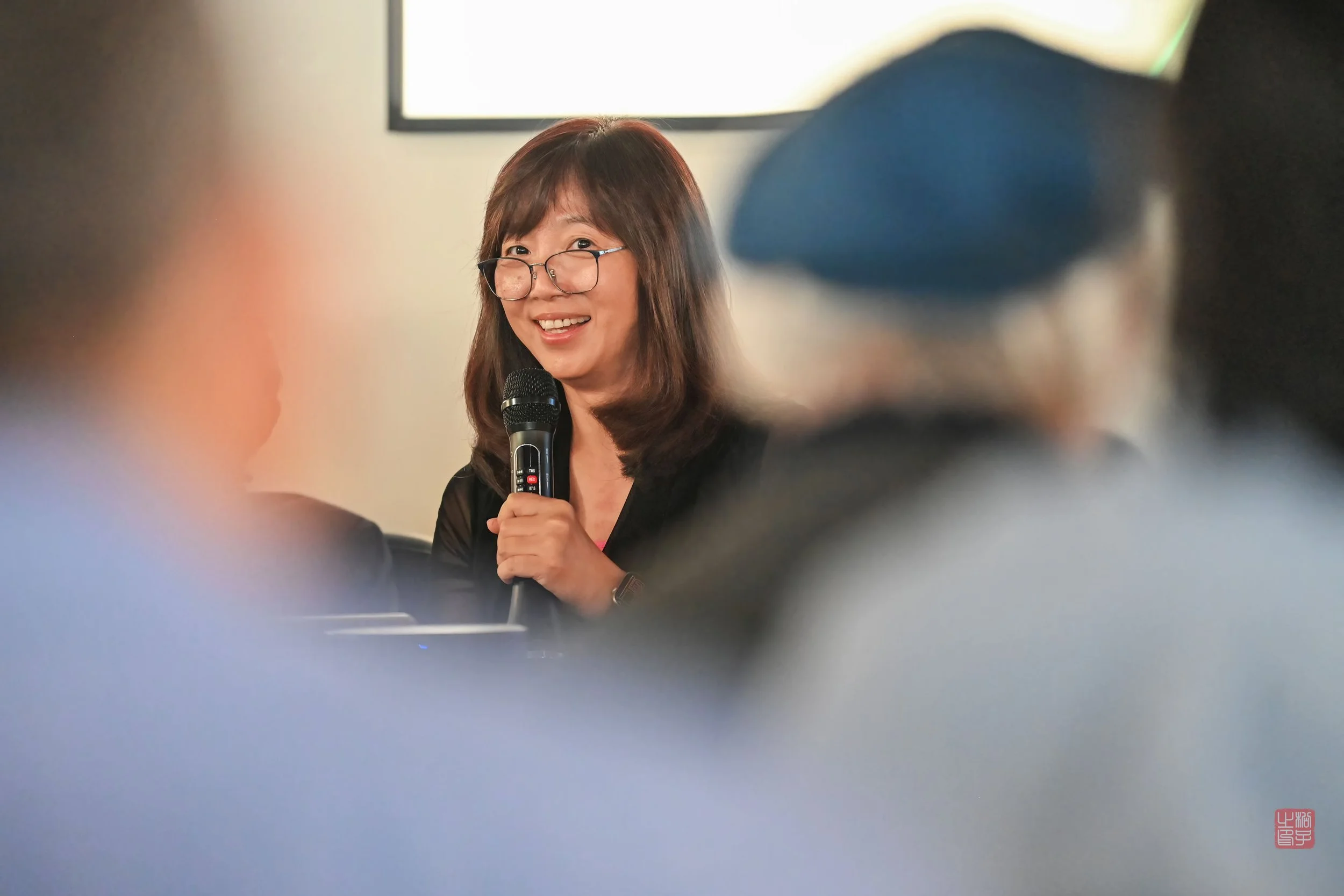
During the exhibition, the artists presented a public conversation, Different Paths, One Realm: How Photography Becomes Creation, on Sunday, September 27, from 3:00 to 5:00 p.m. They shared their individual creative journeys and discuss how photography can evolve from a medium for recording reality into a means of perception and artistic creation.
Silicon Valley Asian Art Center
150 E Santa Clara St, Suite B, San Jose, CA 95113
Light of Becoming will remain on view through October 11, 2026. Visitors are warmly invited to experience the exhibition at the Silicon Valley Asian Art Center—to look, to feel, and, through the interplay of light and image, to reconsider the relationship between photography and artistic creation.
下面为硅谷亚洲艺术中心副馆长徐心如写的新闻稿原稿:
《流光化境:刘荣黔、宁爱东视觉艺术展》在硅谷亚洲艺术中心开幕
9月19日下午,《流光化境:刘荣黔、宁爱东视觉艺术展》在硅谷亚洲艺术中心隆重开幕。艺术家、学者、文化界人士及各界嘉宾云集,共同见证这场以摄影为媒介、从观看走向感知的视觉艺术展览。
开幕现场,大西洋摄影家协会发来贺电,称“艺术因交流而生辉,光影因分享而长存”,感谢硅谷亚洲艺术中心长期以来对艺术与文化交流的推动与支持。牡丹诗会会长林中明教授致辞,分享对两位艺术家创作的观察与感受。硅谷品茗乐茶会亦特别侍奉茶席,创会会长吴静西女士更取出珍藏十六年的福鼎白牡丹,邀请来宾在光影流转之间品一杯香茶。茶香、影像与艺术交织,使展览开幕呈现出独特的东方文化气韵。
《流光化境》以「摄影如何从再现走向创造」为核心,汇聚刘荣黔与宁爱东两位艺术家的作品。两人拥有截然不同的人生与艺术背景,却在长期探索中走向同一个方向——不再满足于记录眼前之物,而是在光、色彩、形态与时间之间,寻找影像自身的可能性。
刘荣黔的艺术道路始于国立台湾师范大学美术系的水墨山水,之后赴巴黎研习现代艺术与平面设计。水墨所孕育的气韵与意境,以及现代设计中的构成、色彩与视觉节奏,在他数十年的创作中逐渐交融。近三十年来,刘荣黔以「即创主义(Swiftism)」为创作核心,提出「相机当画笔、用感觉来感觉」的理念。他不把相机仅仅视为记录现实的工具,而是将其转化为直接捕捉感知、创造影像的媒介。
此次展出的作品大致呈现其创作探索的三个面向。其中一组作品将池塘倒影与泼墨结合,水面、树影与墨色彼此交融,呈现出浓厚的水墨意味。眼前的自然景物在摄影瞬间被重新解构,既似山水,又超越具体山水。另一组作品则来自舞蹈家郑月燕的飞动身影。刘荣黔从舞蹈的瞬间中捕捉裙裾飞扬的形态,在大量影像中「百里挑一」精选出五幅作品。人物在画面中甚至逐渐淡出,留下的是裙裾、线条、速度与光影形成的视觉律动。蔡月燕女士也亲临现场,与艺术家及嘉宾交流,为展览增添了别样的艺术亮色。第三组作品则以花卉为主题。花朵不再只是被摄取的对象,而在光影与色彩的重新组合中,逐渐走向抽象,成为色彩、肌理、线条与节奏。刘荣黔的摄影不再追问「它是什么」,而逐渐接近「它让我们感受到什么」。
与刘荣黔由水墨与设计走向摄影不同,宁爱东的艺术道路起于科学与技术。宁爱东本科及硕士毕业于清华大学电子工程系,赴美后曾在矽谷高科技公司从事软体工程工作。理性、技术与严谨,构成了她早年生命经验的重要底色。离开科技行业后,她将时间与目光重新交还给自然,近十二年专注于摄影创作。
风景摄影始终是宁爱东创作的重要根基。经过长期的观看与探索,她逐渐将关注从对自然景观的直接记录,延伸至自然所带来的感受,以及如何透过取景、光影、色彩与形态,将这些感受转化为个人的视觉语言。抽象,亦因此成为她近年持续探索的重要创作方向。 此次展出的作品均以航拍方式完成。随着摄影机升离地面,观看的尺度与视角发生改变,钱塘江的潮汐、矿厂附近的尾矿湖,在俯瞰视野中呈现出截然不同的面貌。水流、矿物、泥土与地貌被重新组织为色彩、线条与肌理,构成近乎抽象的视觉景象。宁爱东关注的并非自然所形成的单纯图案,而是其中蕴含的流动、力量与节奏——潮汐的推移、水流的侵蚀、矿物的沉积,以及时间在大地表面留下的痕迹。 对宁爱东而言,摄影不仅是对「这是什么」的呈现,更是一种将自然经验转化为视觉感受的方式。透过静止的影像,她试图捕捉自然内在的流动与生命感,并将观看自然时产生的情绪与感受融入作品之中。在她的创作中,具象与抽象并非截然分离的两种形式,而是观看与感知自然的不同层次:从辨识景观,到感受景观,再到以影像重新理解自然。
如果说刘荣黔是从水墨与设计走向「即创」的自由感知,那么宁爱东则是从电子工程与科技走向自然,再从自然走向抽象。两条完全不同的人生道路,最终在摄影中相遇。《流光化境》并非单纯展示两位摄影家的作品,而是呈现两种不同的观看方式,以及两条不同的艺术道路如何在摄影中汇聚。一位从水墨出发,以相机为笔,在瞬间捕捉感觉;一位从科学与技术出发,以航拍重新观看大地,在自然的形态与色彩中寻找抽象。不同的背景、不同的方法,却都在逐渐远离对现实的直接再现,走向「所见」与「所感」之间更加自由的空间。
展览期间于9月27日下午3时至5时举行了艺术座谈 《异途同境:摄影如何成为创造》。两位艺术家进一步分享了各自的创作历程,以及摄影如何从记录现实的媒介,转化为感知与创造的方式。
展览将持续至2026年10月11日,欢迎各界人士莅临硅谷亚洲艺术中心,在光影之间观看、感受,并重新思考摄影与艺术创造的关系。
地址:150 E Santa Clara St, Suite B, San Jose, CA 95113。